Presentation excerpts

Problem
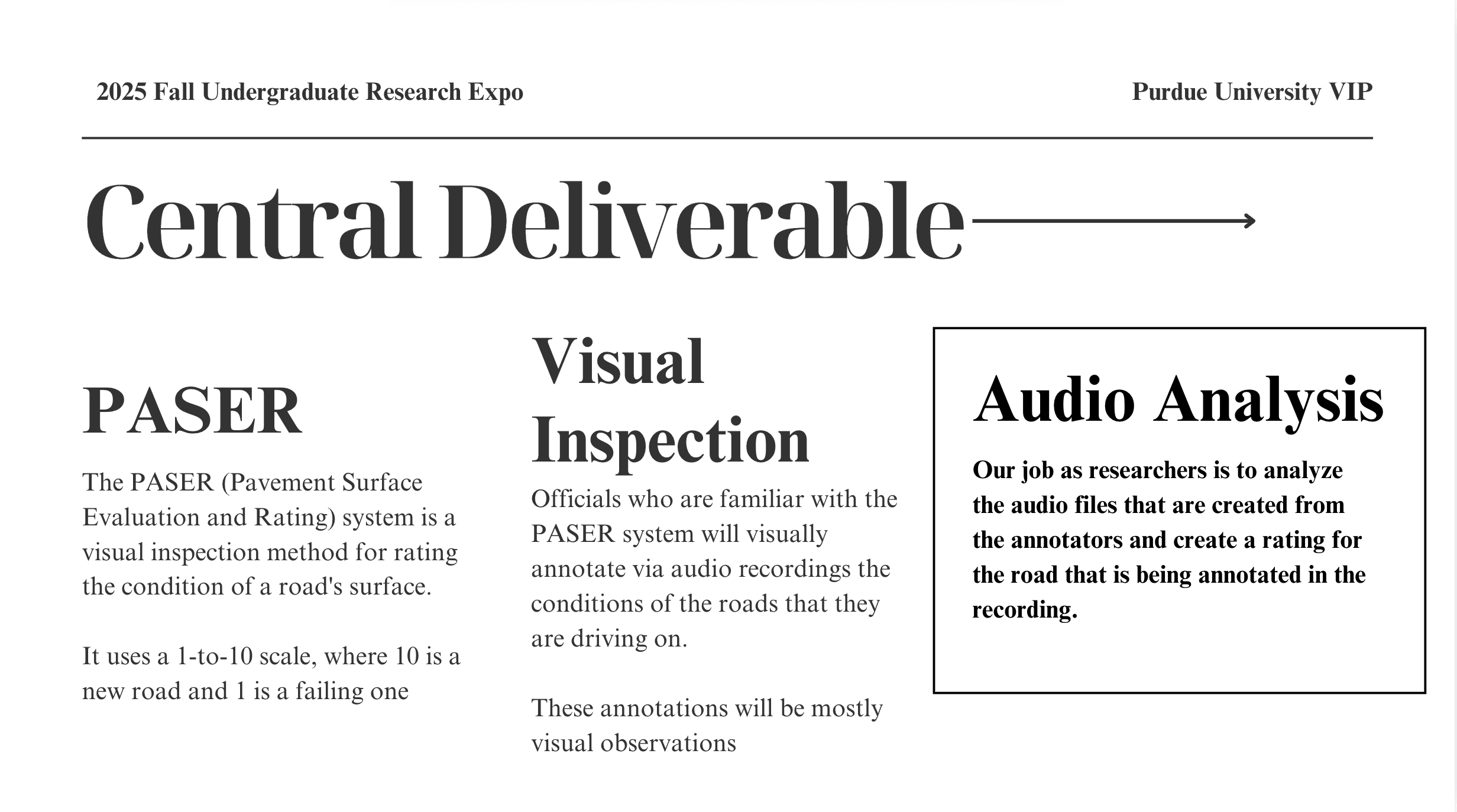
The project addressed pavement-condition classification using real-world audio, with a focus on whether spoken or transcribed language could serve as a structured signal alongside more traditional condition grading frameworks.
Approach
The work combined speech transcription, feature engineering, and model training. Audio-derived text was transformed into structured representations using TF-IDF, n-gram, and sentiment-oriented signals before classification.
Methods and tools
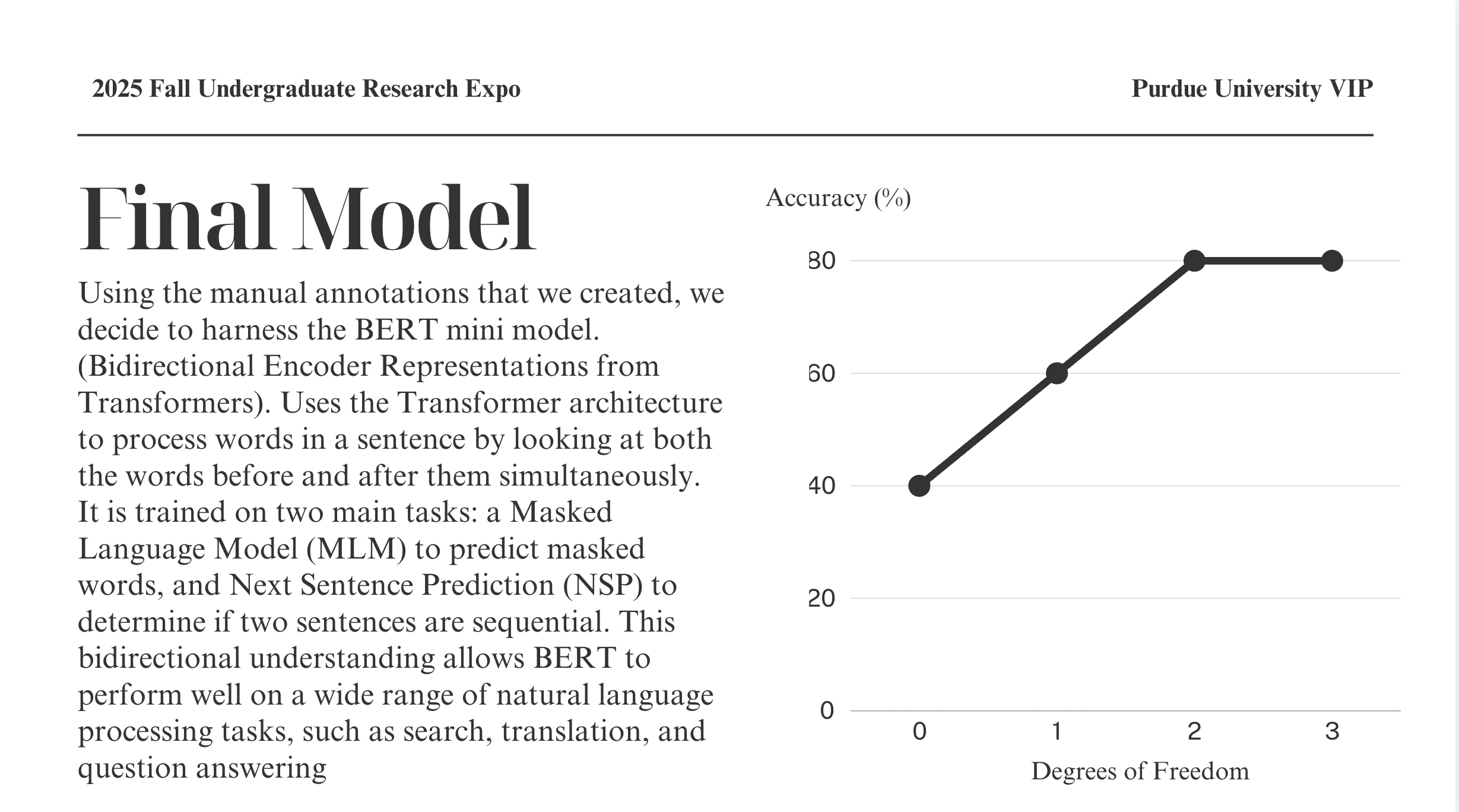
The pipeline incorporated transcription, preprocessing, model comparison, and evaluation. Logistic regression and BERT were trained and compared to assess which representation produced stronger pavement-condition predictions.
Findings
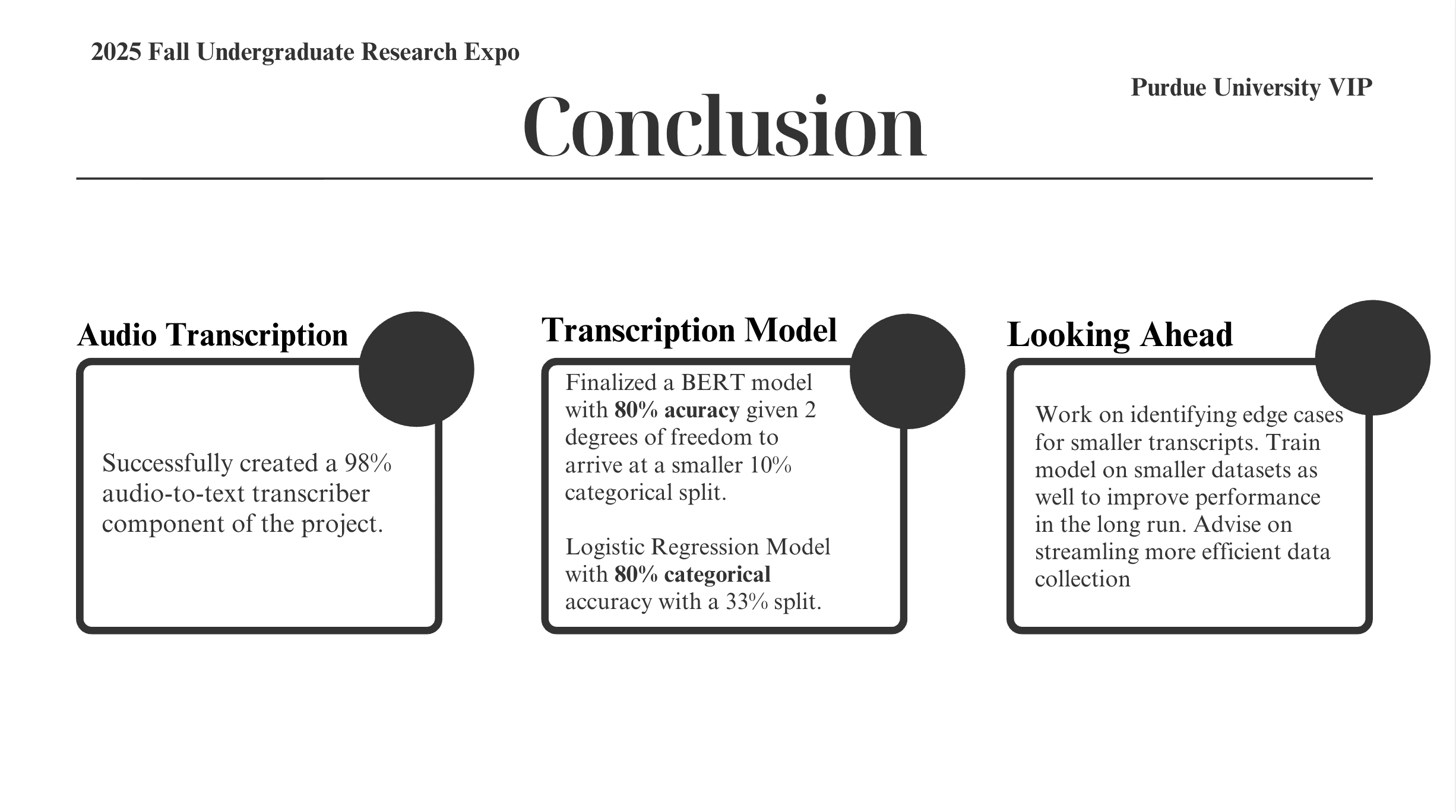
The project achieved 90% classification accuracy across pavement-condition categories and won the Presentation with High Distinction award. The work also included analysis of model confidence and misclassifications to understand where the system was stronger or weaker.
Limitations and future directions
This project is best understood as an exploratory research effort rather than a production deployment. Future work would include broader dataset validation, deeper error analysis, and systematic evaluation design for more robust generalization.